Attic Mold Remediation in Salt Lake City, UT
A lake-effect storm dropped a foot and a half on your Holladay rambler in January, and the flat-roofed family room added in 1974 held it for three weeks. By February there was a brown ring on the family room ceiling, and when you pushed up the attic hatch with a flashlight the underside of the roof deck above that room was streaked black and the insulation was matted and damp. This site connects you by phone with an independent local provider who does attic mold remediation in Salt Lake City and across Salt Lake County.
Tracing a ceiling stain uphill to the ice line
The crew goes up with a meter and a light and reads the sheathing, the rafters or trusses, and the top of the insulation above the stain. On a low-slope roof the water comes from an ice dam: snow melts against the warm deck, runs to the cold edge, freezes, and the pool behind it backs up under the membrane or the shingles. The streaks run from the eave inward, and the crew follows them to the entry point.
Then they look at the other attic water source common here. A swamp cooler curb cut through the roof, or a bathroom fan that dumps into the attic instead of through it, leaves a wet patch with no ice dam at all. The crew tells you which one you have before anything is cleaned, because a cooler drip and an ice dam get fixed by different trades.
Leave the insulation in place and call a roofer first
Leave the wet insulation where it is rather than pulling it yourself. It is the material most likely to be holding growth, and carrying it down through the house without containment spreads it. Photograph the ceiling stain, and if you can do it safely from the hatch, the sheathing above it.
Have a roofer look at the membrane, the flashing, and the edge before the next storm; remediation under a roof that still leaks is a job that repeats. If the house has a rooftop cooler, shut off its water until someone has checked the pan and the curb flashing. In winter, knock heavy snow off a flat roof edge with a roof rake from the ground, not by climbing up.
Deck scrubbed, insulation swapped, hatch sealed the whole time
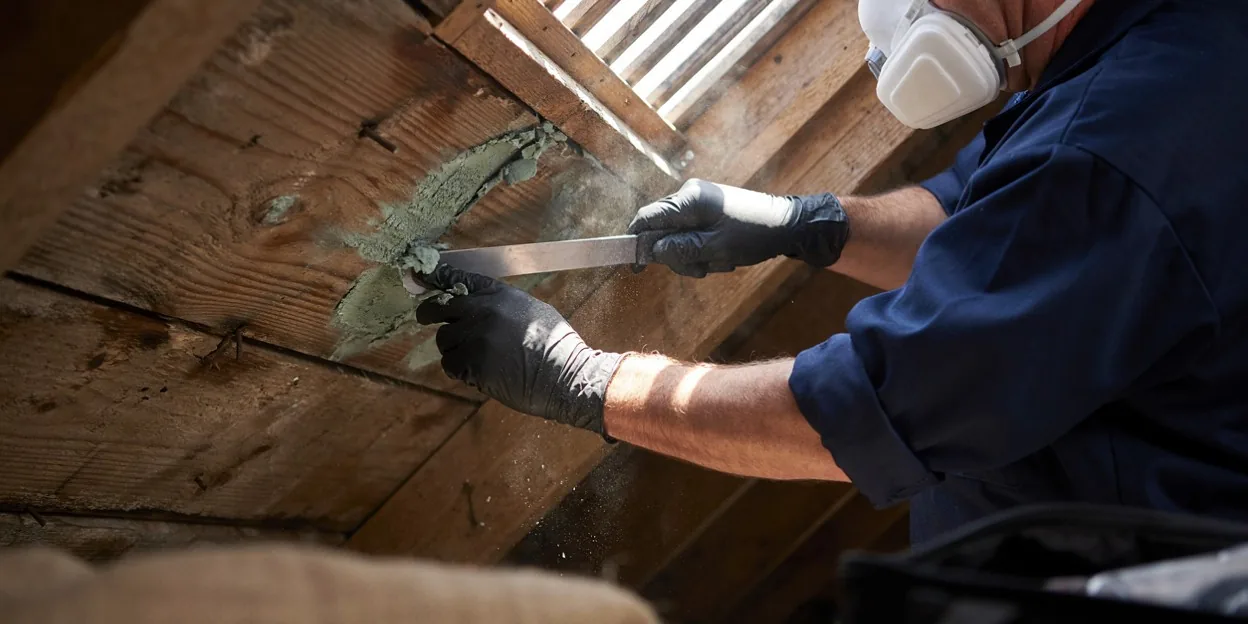
The crew seals the hatch with plastic and runs a HEPA scrubber up in the attic, so nothing from the deck drifts down into the family room. Wet insulation under the stained area goes into bags and out through the hatch inside the containment. The sheathing and framing are HEPA vacuumed and cleaned, and where the growth has gone into the grain, sanded or media-blasted, then treated. Deck that has delaminated is replaced from the roof side, which is the roofer's job.
Fresh insulation is laid only after the deck and framing read dry. A ceiling that stayed wet long enough to sag comes out from below under mold removal. Growth inside the cooler drop or the duct runs is HVAC mold cleaning. Putting the family room ceiling back, drywall and texture both, is mold damage repair.
Lake-effect snow, flat-roofed additions, and the cooler on the roof
Salt Lake City averages about fifty-two inches of snow, with lake-effect bands off the Great Salt Lake adding heavy, wet dumps six to eight times a winter. Pitched roofs shed most of it. The flat and low-slope additions put on 1950s to 1970s ranches in Holladay, Millcreek, Murray, and Taylorsville do not, and an addition with a warm ceiling and a cold edge builds an ice dam every January. Add a rooftop evaporative cooler with a curb cut through the deck, and most older roofs in the valley have two ways to put water on the sheathing.
Utah does not license mold contractors; the provider represents its own training, and the roof repair is licensed roofing work under a Utah contractor license. Ice dam damage is often a covered loss on a Utah policy, but the mold that follows may fall under the policy's mold cap, so photograph the stain and the attic before anyone touches either.
When you call about black streaks on a Salt Lake roof deck
Have the address, when the stain appeared, whether the roof over it is flat or pitched, and whether the house has a swamp cooler. Say whether a roofer has been up and whether the insulation is still damp. Call (801) 457-5486.