Mold Removal in Salt Lake City, UT
The downstairs bedroom in your 1958 Millcreek rambler has a gray band along the bottom of the north wall, and the carpet in that corner feels cold through your socks. Nothing leaked that you know of. The window well on that side filled to the sill in April when the snow came off the yard, and the wall has not been right since. This site connects you by phone with an independent local provider who does mold removal in Salt Lake City and across Salt Lake County.
Reading a foundation wall from the inside
No one cuts anything until the wall has been read with a meter. A pin meter on the drywall and a non-invasive meter on the slab and the concrete behind it tell the crew how high the water climbed and how far it ran along the wall, which in a basement is usually farther sideways than the stain shows. They mark that line on the bedroom side, inside the closet, and on any wall that shares the bottom plate.
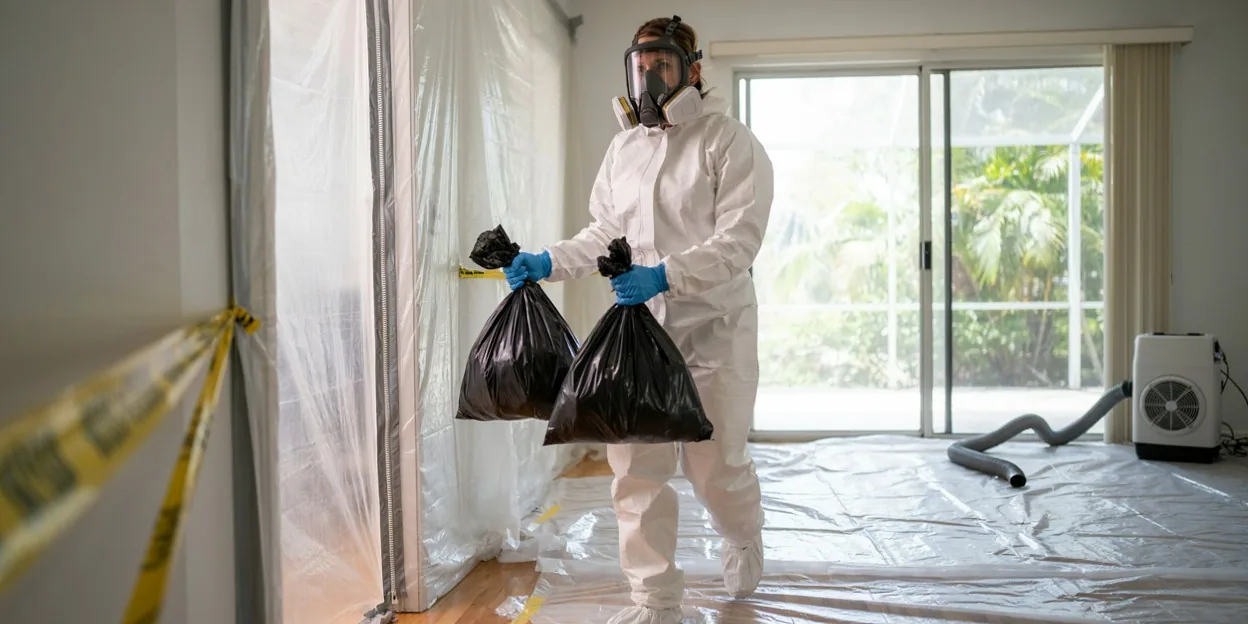
Then containment goes up. Plastic seals the bottom of the stairwell, the furnace return and the supply registers in the basement get taped over, and a HEPA air scrubber ducts out through the window well so the room runs under negative pressure. Dust from the demolition stays behind the plastic instead of climbing to the kitchen.
Pull the carpet back and leave the drywall alone
Lift the carpet and pad away from the wet wall so air can reach the slab, and photograph the pad, the tack strip, and the wall. Do not pull the baseboard or cut the drywall yourself; a wet board sheds spores when it tears, and without containment they ride the furnace blower upstairs.
Run a dehumidifier if you own one and keep the basement door closed. Skip the bleach. It wets the paper face and leaves the growth in the gypsum. Walk the outside of the house and look at that window well, the downspout above it, and the grade along the foundation; whatever let the water in has to be fixed before the wall is closed.
Drywall to the mark, framing and concrete stay
Wet drywall, baseboard, carpet pad, and any fiberglass in the wall come out to a set distance above the meter line and go into bags inside the containment. The studs, the plate, and the concrete behind them stay in place when they read dry once cleaned. A bottom plate that has sat in spring water for several seasons sometimes has to be cut and replaced, and the crew tells you before they do it.
After demolition every surface inside the plastic gets HEPA vacuumed and wiped. Air movers and a dehumidifier run until the framing and the concrete read dry, which after a wet spring can take a week or more. If the growth has reached the ductwork, see HVAC mold cleaning. When the meter finds wet walls in several rooms, the job grows into whole-home mold remediation. Closing the wall back up is mold damage repair.
Window wells, weeping stone, and the Utah license question
Nearly every Salt Lake home built before 1990 has a full basement, and most of them are finished. Snowmelt between March and June raises the water table under the slab, fills window wells that were dug without a drain, and pushes through the stone and brick foundations under the 1890s to 1920s houses in the Avenues, Liberty Wells, and Sugar House. The record snowpack of 2023 put water into basements that had been dry for thirty years.
Utah has no mold license. Removal is a trade the provider represents its own training in; replacing drywall, trim, and carpet is contractor work under a Utah Division of Professional Licensing license, and a rebuild that touches plumbing or wiring needs a permit from Salt Lake City or your own city. Most Utah homeowner policies exclude seepage and groundwater, so tell your adjuster whether a pipe or the ground was the source.
Calling about a wet basement wall in Salt Lake
Have the address, which wall is wet, and whether a window well, a downspout, or a pipe is the likely source. Say how long the carpet has been damp and whether anyone has painted over the stain. Call (801) 457-5486.