Mold Removal in Magna, UT
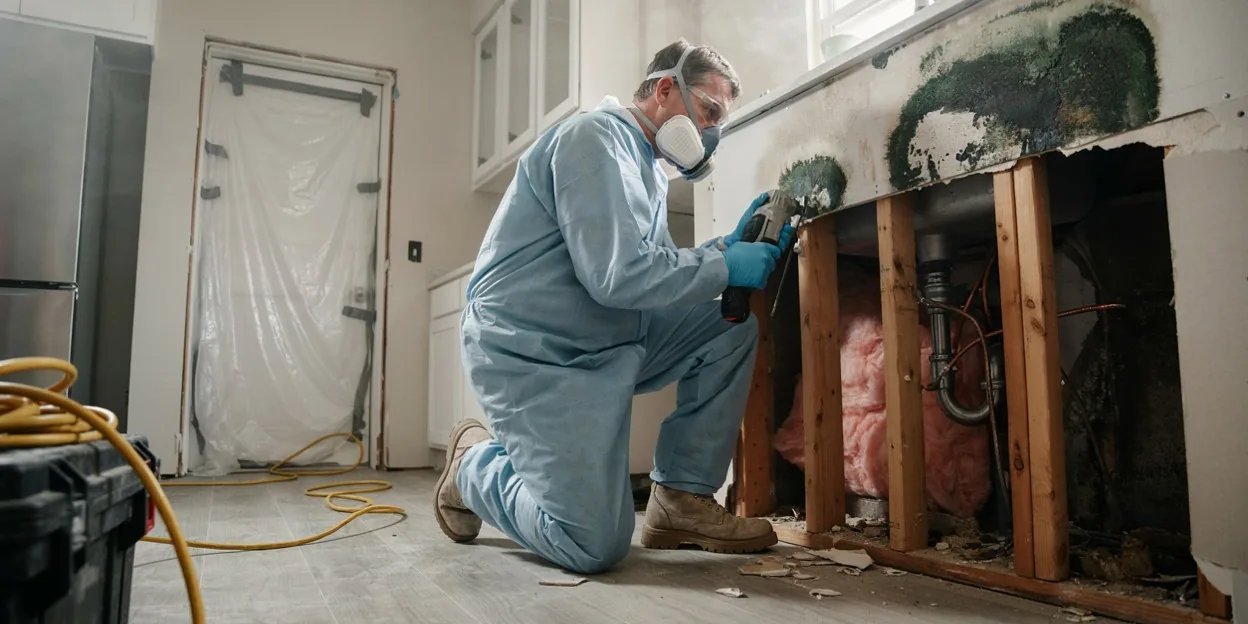
Magna grew up around the Utah Copper Company mill that began construction in 1906 at the base of the Oquirrh Mountains, and the name comes from the Latin for great. The 2020 census counted 29,251 people; the town became a metro township in 2017 and a city on May 1, 2024. The housing is a 1900s to 1920s brick core along Main Street surrounded by 1960s and 1970s working-class ramblers and split-levels, built in the suburban boom that doubled the county's growth rate here. Basements are common, and the older foundations are unreinforced brick.
At 7:09 a.m. on March 18, 2020, a magnitude 5.7 earthquake struck just north of town, the strongest in the valley in decades, followed by more than 2,500 aftershocks over the next year. Magna took the worst of it: historic Main Street buildings were damaged, Cyprus High School was badly hit, and across town foundations and plumbing joints cracked. Many of those cracks only show themselves each spring, when groundwater from the melt finds them.
Homeowners in Magna reach an independent local mold provider through this site's phone line. That provider traces the wet line to the crack or the pipe and tells you what has to come out. We only set up the call.
Magna mold removal after the 2020 earthquake
A basement wall that weeps through a crack that opened in 2020 is mold removal, with the crack sealed by a foundation contractor first. A dark bloom on old brick or block behind paneling is black mold removal. A rooftop cooler dripping down the duct chase is HVAC mold cleaning.
The quake record, kept by the university
The University of Utah Seismograph Stations keep a public summary of the 2020 Magna earthquake and its aftershock sequence, useful when an adjuster asks when a crack appeared.
Call (801) 457-5486 and tell us where the wall is wet. We put you through to a local mold provider serving Magna.
Services Available in Magna
Mold Removal
Growth on a basement wall after a window well filled or a stone foundation wept: room sealed, wet drywall cut to the meter line, framing cleaned and dried.
Black Mold Removal
A dark patch on a basement wall or behind a vanity, handled by how far the water went rather than its color: contain, remove, clean, then fix the leak.
Whole-Home Mold Remediation
A finished basement that soaked through during the melt, or a supply line that ran for weeks, mapped room by room and cleared in zones as one job.
HVAC Mold Cleaning
Swamp cooler pads, duct runs, furnace plenum, and the condensate pan cleaned when the house smells musty every time the blower or cooler starts.
Bathroom Mold Removal
Growth above a shower with no fan, behind a 1920s tile wall, or under a vanity with a slow trap leak, removed once the moisture source is fixed.
Attic Mold Remediation
Dark sheathing under a flat roof that iced up in January, or around a cooler curb, cleaned and treated once the ice dam or the roof leak is corrected.
Mold Odor Removal
A musty basement smell with nothing visible, traced to the wet carpet pad, the back of the paneling, or the bottom plate, then removed at the source.
Mold Damage Repair
Drywall, baseboard, carpet pad, and cabinet floors put back after removal, once the basement reads dry and the seepage or pipe is fixed.