Mold Removal in Yalecrest, UT
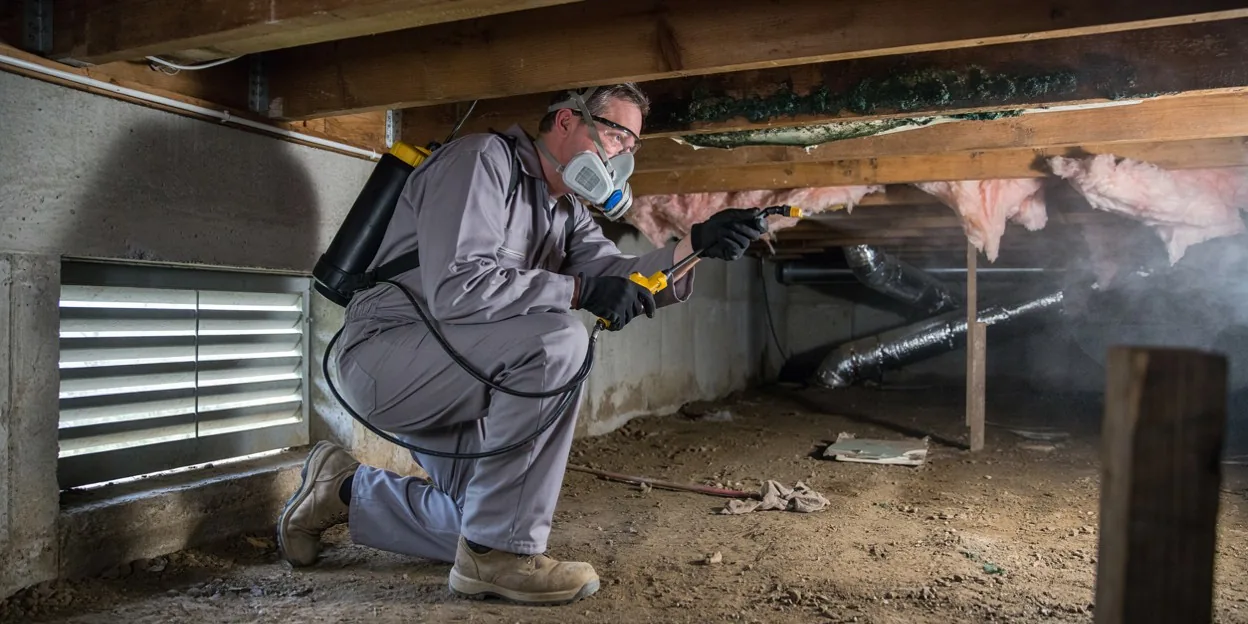
Yalecrest runs from 800 South to 1300 South between 1300 East and 1900 East on the East Bench, and it is the valley's largest intact collection of period revival cottages: about 1,487 houses and duplexes built between 1910 and 1938, with 74 percent of them from the 1920s and 1930s and English Tudor and English Cottage styles setting the look. The district went on the National Register in 2007 for its high degree of historic integrity. Every house has a basement, dug when a basement meant a furnace room and a coal bin.
Those 1920s basements were finished into family rooms and bedrooms from the 1960s onward, with carpet on the slab and drywall against poured or brick walls that had wept quietly for forty years. The bench slopes west, so meltwater from the yards above runs toward the uphill wall, and Emigration Creek, which flooded across 1700 South just south of here in April 2023, marks how much water the East Bench carries in a big year.
Homeowners in Yalecrest reach an independent local mold provider through this site's phone line. That provider meters the uphill wall and the slab before deciding what comes out. We only set up the call.
Yalecrest mold removal under a Tudor cottage
Growth on the drywall of a finished 1920s basement after the melt is mold removal. The single 1928 bathroom with a black ceiling corner and no fan is bathroom mold removal. Putting the family room back once the wall reads dry is mold damage repair.
Neighbors who keep the district's records
Keep Yalecrest maintains the neighborhood's history and the National Register documentation, which is where a homeowner finds out when the house and its basement were built.
Call (801) 457-5486 and tell us about the basement wall. We put you through to a local mold provider serving Yalecrest.
Services Available in Yalecrest
Mold Removal
Growth on a basement wall after a window well filled or a stone foundation wept: room sealed, wet drywall cut to the meter line, framing cleaned and dried.
Black Mold Removal
A dark patch on a basement wall or behind a vanity, handled by how far the water went rather than its color: contain, remove, clean, then fix the leak.
Whole-Home Mold Remediation
A finished basement that soaked through during the melt, or a supply line that ran for weeks, mapped room by room and cleared in zones as one job.
HVAC Mold Cleaning
Swamp cooler pads, duct runs, furnace plenum, and the condensate pan cleaned when the house smells musty every time the blower or cooler starts.
Bathroom Mold Removal
Growth above a shower with no fan, behind a 1920s tile wall, or under a vanity with a slow trap leak, removed once the moisture source is fixed.
Attic Mold Remediation
Dark sheathing under a flat roof that iced up in January, or around a cooler curb, cleaned and treated once the ice dam or the roof leak is corrected.
Mold Odor Removal
A musty basement smell with nothing visible, traced to the wet carpet pad, the back of the paneling, or the bottom plate, then removed at the source.
Mold Damage Repair
Drywall, baseboard, carpet pad, and cabinet floors put back after removal, once the basement reads dry and the seepage or pipe is fixed.